

Contents
Questions about your own situation? Written Answer →
Applying on your own? Document Check →
Updated November 10, 2026 (first published September 4, 2026)
According to reports by Nikkei (Japan’s leading business newspaper) in July and August 2026, the Japanese government is considering raising the income threshold used to qualify for the “Highly Skilled Professional” (高度専門職, HSP) status of residence, along with a broader review of how the visa’s points-based system is scored. If you currently hold HSP status, or are considering applying, here is what has been reported so far.
What is the HSP visa, and why does income matter?
The HSP visa is a preferential status of residence for foreign professionals in advanced academic research, specialized/technical fields, and business management. Unlike most other work visas, eligibility is determined by a points system: applicants earn points for factors such as academic background, professional career, annual income, age, and Japanese language ability. Reaching 70 points (or 80 points for the fastest track to permanent residence) qualifies you for HSP status.
Annual income is one of the most heavily weighted factors in this points calculation, and it also determines eligibility on its own — applicants in the specialized/technical (1(b)) and business management (1(c)) categories must earn at least 3 million yen a year; below that, they cannot qualify no matter how many points they score on other items. (There is no fixed income minimum of this kind for the academic research category, 1(a).) Age matters in a different way: in categories 1(a) and 1(b), the income level at which income points start to be awarded depends on your age — from 4 million yen if you are under 30, rising to 8 million yen if you are 40 or older. HSP status brings substantial benefits, including priority processing, the ability to bring parents or domestic helpers to Japan under certain conditions, and — most notably — eligibility for permanent residence in as little as 1 to 3 years, far faster than the standard 10-year requirement.
What is reportedly changing
Per Nikkei’s reporting, the government’s review centers on two points:
- A higher income threshold. The minimum and points-qualifying income levels used in the HSP scoring system would be raised, with the stated aim of prioritizing higher-earning, higher-value professionals among applicants.
- A simplified, revised points structure. The current system separates “basic” items (income, academic background, career, etc.) from “bonus” items (such as Japanese-language ability). Reports suggest the government wants to streamline these categories, both to reflect income more heavily and to speed up the screening process for applicants.
Nikkei’s July report indicated that a ministerial ordinance revision could take effect as early as fiscal year 2026 (i.e., by March 2027). However, as of the mid-August report, the specific new income figures, the revised points allocation, and the implementation date had not yet been finalized or officially announced.
October 2026 update
At a press conference on October 16, 2026, Minister of Justice Takashi Yamashita said the ministry is working to further optimize the HSP points system, speed up screening, and make the system better known. Two days later, on October 18, Jiji Press (a major Japanese news agency) reported that the Immigration Services Agency had decided to raise the minimum annual income requirement from the current 3 million yen, in light of rising wages, and is aiming to revise the relevant ministerial ordinance within this fiscal year (i.e., by the end of March 2027).
As of November 10, 2026, the new income amount, the effective date, and any transitional measures for current HSP holders have not been announced. Note that “within this fiscal year” is the target for revising the ordinance; it does not necessarily mean the new rules will apply from that date.
What this means for you
The Immigration Services Agency has not confirmed any figures yet. Also, application timing is fixed by law — for example, you can basically apply for an Extension of Period of Stay within three months before your current visa expires. For now, the best thing to do is simply wait for official information. Before a ministerial ordinance change like this takes effect, there is usually a public comment period, which will make the final numbers and start date clear. We will publish a follow-up article once official details are announced.
From TKG Immigration Consulting Office
Applying from abroad under the current rules?
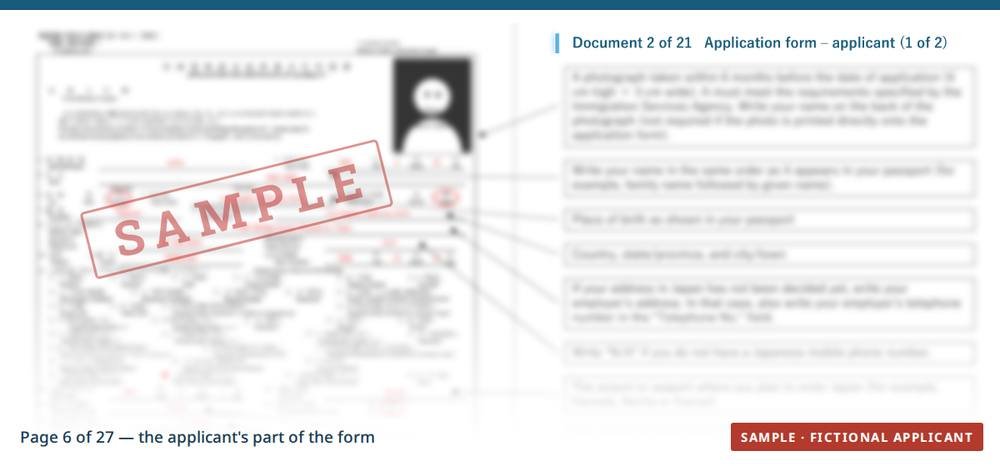
This article is about the policy discussion. On the practical side: your employer submits the final package, but of the 13 items on the checklist, about 6 are yours to prepare — your own sections of the application form, your résumé, your certificate copies. Our COE Application Kit is a page-by-page walkthrough of one worked example, with plain-language notes at the points where applicants most often get stuck.
Based on the rules as of August 2026. PDF, 27 pages, instant download, ¥4,950 (about US$32; tax incl.).
See What’s InsideAlready in Japan and extending or changing your status? This kit doesn’t cover that — please contact us below instead.
Want to know more about the HSP visa? Please visit here.
If you would like us to handle your application, send us an inquiry. We will tell you whether we can help and which of our services fits. For questions about your own situation, see our Written Answer.
Disclaimer: This article is provided for general information only and is not legal advice on any individual case. The information is based on sources available as of November 10, 2026. The reports described in this article are those published by Nikkei in July and August 2026 and by Jiji Press in October 2026. Laws, guidelines and their application may change without notice. TKG Immigration Consulting Office accepts no liability for any loss or damage arising from the use of this information. In case of any difference between our English descriptions and the original Japanese texts, the Japanese texts prevail.